YOUR CART
- No products in the cart.
Subtotal:
$0.00
To say that all vacuum impregnation processes are equal would be to say that every die casting process is the same. Nothing could be further from the truth. The vacuum impregnation process will have a direct impact on the sealing quality.
Water, as we all learned in basic chemistry, exhibits a unique phenomenon: as it solidifies, it expands. For other liquids in our physical world, solidification results in just the opposite: shrinkage.
Ever since metal casting was first discovered, casting porosity, an area of sponge-like internal structure in an otherwise sound metal part, has been a problem. Porous castings may be caused by internal shrinkage, gas cavitation, oxide films,inclusions and combinations thereof. It can be found in virtually any type of metal casting or part, and is a particular problem in castings made from aluminum, zinc, bronze, iron, magnesium, and other alloys. Porosity is always present in powdered or sintered metal parts because of their structural nature.
Various methods have been used to attempt filling casting porosity openings in parts designed to contain liquids or gases under pressure. One of the first materials used for impregnation was “water-glass” or sodium silicate. In addition to sodium silicate, tung oil, linseed oil, pitch gum and many other materials were used with little success. Shortly after World War II, the development of thermosetting plastics, to be used as impregnants, became an effective and economical means of sealing porosity within the walls of metal castings, especially when used in conjunction with vacuum pressure impregnation techniques.
Vacuum impregnation in metal castings and powdered metal parts refer to the sealing of leaks resulting from porosity. The impregnating sealant, as a liquid, is introduced into the voids or porosity within the wall of the part usually using vacuum and pressure. The sealant is then solidified, filling the porous openings and making the part pressure tight.
Related: Watch How Vacuum Impregnation Seals Porosity
Impregnation of powdered metal parts not only seals parts for pressure applications, but also improves plating or finishing, since bleedout or spotting due to entrapment of plating solutions in the pores is eliminated. Extended tool life is another benefit when machining powdered metal parts.
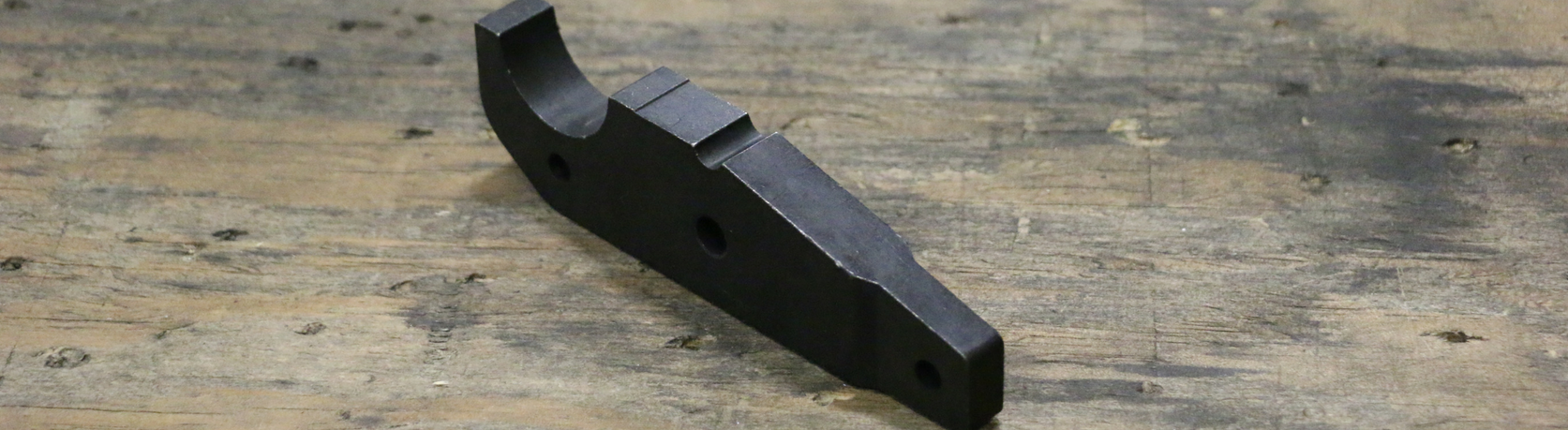
The part was impregnated prior to coating. If it was not impregnated prior to coating,then coating would breakdown.
When castings have blind or continuous porosity areas, impregnation prior to painting or plating improves and protects the final surface finish from bleedout and blistering.
Impregnation technology seals leaks on all ferrous and nonferrous metals, including die castings, sand castings, investment castings, pressure castings, powdered metal parts as well as forgings or weldments. Iron, bronze, aluminum, zinc, magnesium, steel, sintered metal, as well as alloys of these metals can be impregnated. Other non-metallic materials, such as wood, plastic, and ceramics can also be impregnated.
Related: 3 Reasons to Impregnate Powder Metal Components
When casting porosity causes leakage problems, “bad” parts are often sorted out by testing and inspection. The “good” parts that are sent to production are often as porous as the “bad” parts, but the porosity is blind and not completely interconnected. Subsequent machining, mechanical or thermal shock, or stress often breaks the thin membrane which keeps the blind porosity from being continuous, thus causing a “leaker”. Impregnation fills porosity from both sides preventing leaks even if the membrane does break. Therefore, impregnation improves and enhances quality, while inspection only sorts out leakers.
The value added to metal parts by machining, handling, and assembly may range into the hundreds or even thousands of dollars. This value is lost when a metal part is scrapped because of porosity and leaking. Impregnation costs are small fractions of the costs of remelting, recasting, re-machining and part overruns. Impregnation allows the manufacturer to save time, money, energy and insure quality by salvaging parts which would otherwise have to be rejected. The elimination of scrap and rework substantially increases productivity. In addition, 100% impregnation of metal parts sometimes eliminates the need for expensive leak testing, and often results in a dramatic reduction of field rejects in products such as transmission cases, air-conditioners, pumps and other metal parts.
Related: What is the Cost of Vacuum Impregnation?
Impregnation of powdered metal parts provides the added benefit of prolonged tool life (up to 100 times) because Godfrey & Wing sealants serve as lubricants as well as supporting the individual powered metal particles. Lubricity eliminates the chatter effect during the machining process of unimpregnated powdered metal parts.
Because of the proven effectiveness and economies of impregnation, many engineers specify its use for all types of metal parts that must contain liquids or gases under pressure. It is now common for impregnation processes to be incorporated directly into production schedules to insure quality, rather than to be used strictly as a salvage operation.
There are two general classifications of porosity found in metal parts: macro-porosity in the form of large flaws in the part which may be visible to the naked eye; and micro-porosity in the form of very small, almost invisible voids. In powdered metal parts, the structure of the metal results in a condition similar to macro-porosity in castings having low density, and micro-porosity in high density castings.
Related: 3 Types of Casting Porosity
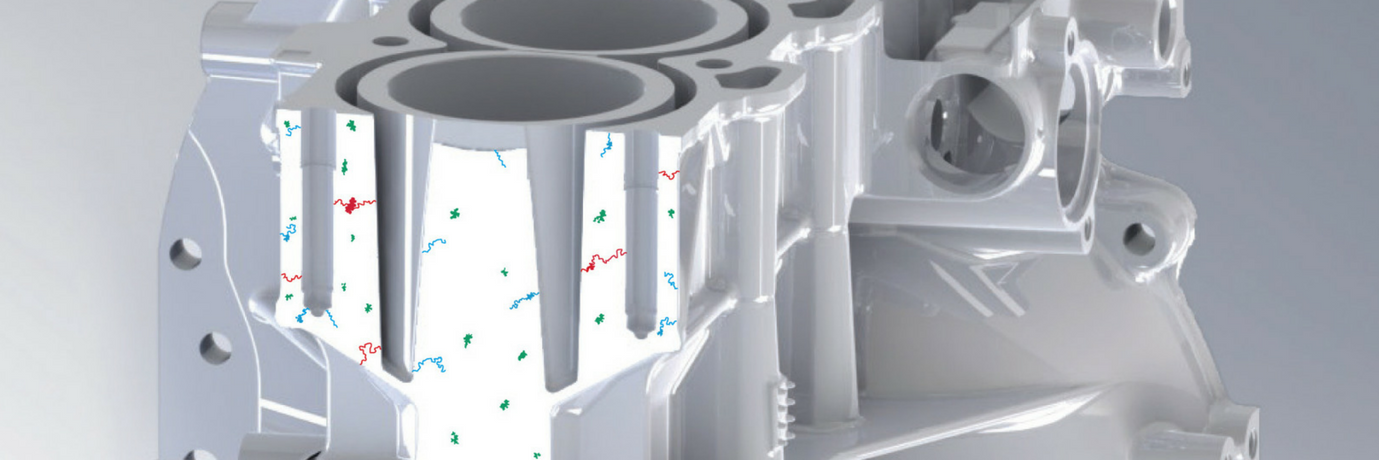
Porosity can be found as “through, blind or totally enclosed” .
Through porosity (highlighted in red) stretches completely through the wall thickness of a metal part causing a leakage path.
Blind porosity (highlighted in blue) is connected only to one side of the part wall.
Totally enclosed porosity (highlighted in green) is totally isolated within the wall thickness of a part.When castings are machined, both blind and totally enclosed porosity are often “opened up” becoming continuous porosity and causing leaks.
There are three common methods of impregnation are dry vacuum-pressure, dry vacuum, and wet vacuum.
The most common process is the dry vacuum-pressure process. The steps to the dry vacuum-pressure are:
Step1:
Parts are loaded into a dry impregnation chamber, and the vacuum is applied until a predetermined setpoint is achieved. This vacuum setpoint has been specified in US military specifications to be no less than 29” of mercury (23.4 Torr or 31mbar). There is no liquid present in the vessel to impede air removal from the porosity. All parts see a uniform vacuum pressure. This is the “Dry-Vacuum” portion of the process.
Step2:
When the vacuum end point is reached, the transfer valve is opened. The sealant is de-gased and pulled from the reservoir to the impregnation vessel while the vacuum is maintained.
Step 3:
Next, the vacuum is released, and overpressure is applied (typically between 70-90 PSI). The pressure is then held to allow the sealant to penetrate the porosity. The transfer valve is re-opened and the sealant is transfered back to the storage reservoir. The parts are removed to be washed and cured.
Related: Types of Vacuum Impregnation Processes
The United States Department of Defense has established military specifications MIL-276A and MIL-I-17563C that outline the requirements for impregnating processes and sealants.
MIL-276A is the military standard for impregnation of porous metal castings and powdered metal components. This standard covers the requirements and tests for the impregnation of structurally sound castings and powder metal components in aluminum, magnesium, copper, iron (excluding steels) and zinc alloys.
MIL-I-17563C is the military standard for impregnation of cast or powder metal components. This standardcovers the requirements for impregnants suitable for use in sealing the voids found in cast or powder metal components which cause leaking of contained fluids.
In order to meet the standards required to produce pressure-tight castings, the ideal sealant must be capable of penetrating and filling the porosity and then solidifying completely within the porosity of the metal parts. The sealant should be a polar, low viscosity liquid containing no inert solvents, no filterable solid materials in suspension and producing no gaseous or liquid by-products on curing or transforming into an impervious solid. These properties allow the sealant to penetrate the tiniest openings and deepest recesses of porosity by capillary action. That is, such a sealant can be drawn in by capillary forces, where it may not be possible to push it using hydraulic pressure alone. In addition, a sealant should be stable, have a long pot life, be easy to handle and test without introducing unacceptable health and safety hazards in the work environment.
Since 1891, The Bonnot Company has designed and manufactured extrusion equipment. One of the unique features of a Bonnot extruder is a hollow screw which facilitates additional process temperature control through a re-circulating liquid.
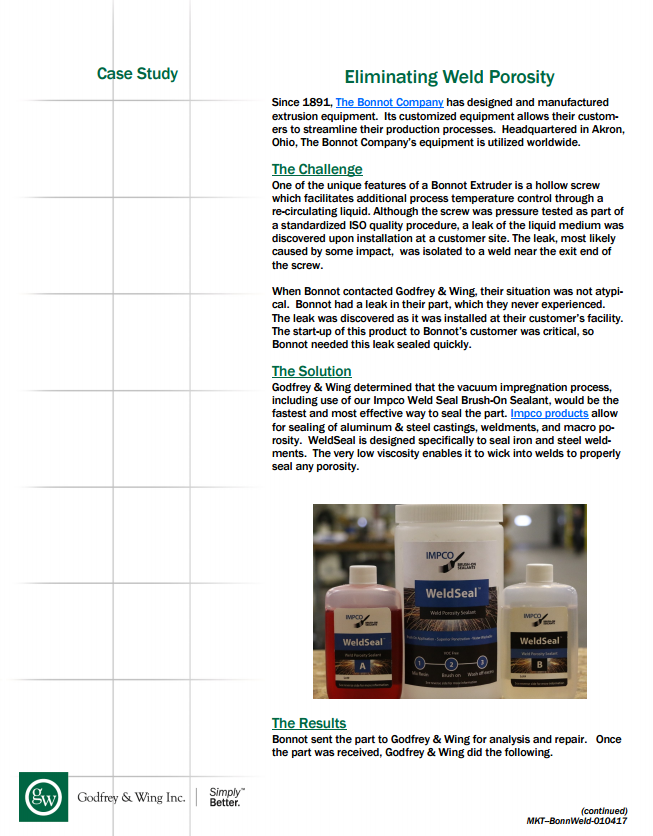
Although the screw was pressure tested as part of a standardized ISO quality procedure, a leak of the liquid medium was discovered as it was installed at the end customer’s facility. The start-up of this product to the customer was critical, so the weld porosity needed to be sealed quickly.
Learn how we helped The Bonnot Company solve this porosity problem.
It is the end of another year. Which means that it is time to address our mixed feelings about New Years
resolutions, and reflect on the year that is about to end. While we cannot help with your 2017 resolutions, we
can look back on the most read vacuum impregnation and porosity blogs of 2016. Here are our top 5 blogs from
2016.
When a porosity problem occurs, the first challenge
is to determine the type of porosity. The following
porosity classification guide can help you determine
the porosity type.
When a customer has a casting with porosity that is leaking,
they need a solution quickly. Here are some of the more common
questions that we receive in regards to vacuum impregnation and porosity.

Casting impregnation stops leaks caused by porosity.
It is important to understand what vacuum impregnation does not do.
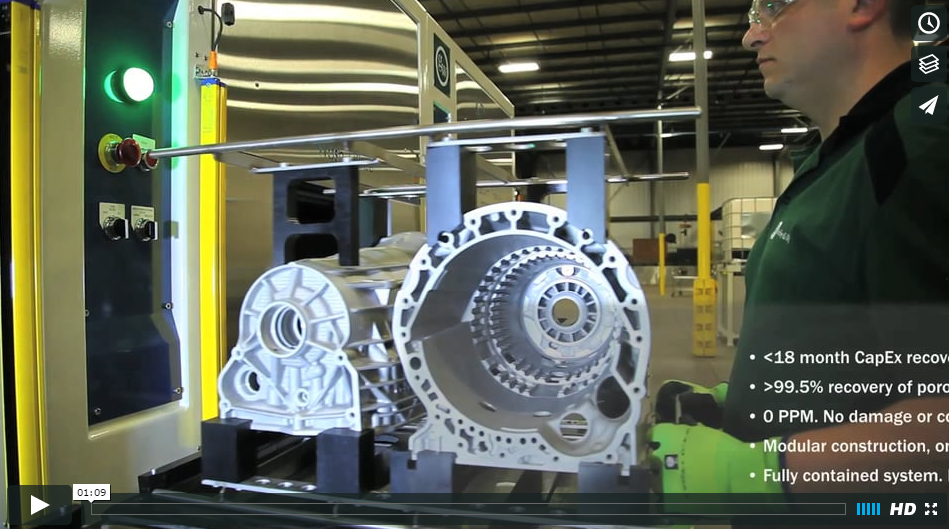
The Advanced Powertrain impregnation (APi) system simplifies
and compacts the vacuum impregnation process for parts like
engine blocks or powertrain transmission cases.
Next year, we will continue to write insightful and helpful content on vacuum impregnation and porosity. Don’t worry,
our 2017 blogs will not require gyms or special diets. They will help you understand vacuum impregnation and solve
your porosity problems.
From our team to your, Happy New Years.
When choosing a vacuum impregnation sealant, you have two sealants choices: thermal-cure, or anaerobic. Choosing one over the other has nothing to do with the quality of the sealant, but it has everything to do with the part material, size of the pore, and leak path.
Curious on what sealant is best for you? The following infographic is a simple snapshot that will help educate and allow you to determine if thermal-cure or anaerobic sealant is best for your needs.
(more…)
We posted a blog in May about the common frequently asked questions about vacuum impregnation. With the complexity of the subject, these questions and answers do not fully address all porosity and vacuum impregnation questions. The following are additional answers to commonly asked questions about porosity and vacuum impregnation.
This question should read “How much can you save?”. It is important to remember that impregnation costs are a small fraction of remelting, recasting, remachining and overruns. Vacuum impregnation seals the inherent problem of porosity, thus allowing parts once deemed as scrap to be useable. The cost of impregnation depends upon several factors including (but not limited to) the size and complexity of the casting, the amount of castings to be impregnated, and the type of material used to impregnate.
Micro-porosity causing “weepers” is usually easy to seal. For larger micro-porosity and macro-porosity sealing depends on wall thickness and the type of porosity present. Straight through porosity in thin walls is difficult to seal. Sponge like porosity of any type can usually be sealed. 100% solid resin will seal porosity many times larger than other impregnants.
No. When sealing porosity within the wall thickness of a casting, the sealant is locked in and will remain so for the life of the casting.
For most sealants, 400°F is the highest temperature generally recommended for continuous usage, but will withstand 500°F temperatures for short intermittent periods. Higher surface temperatures, up to 1400°F, can be withstood without resin failure when parts are water-jacked or forced air-cooled. This is because sealant remains strong and solid in the porous areas of the cool side. The sealant may char next to the hot side, it never melts and is protected by the thermal conductivity of the metal. Examples of this are automotive cylinder heads and blocks.
As long as the casting itself.
In addition to sealing for pressure tightness, impregnation is used to seal sintered components and other parts to avoid corrosion. It is also used prior to electro-plating to prevent bleedout from acid etches and electrolytes absorbed into porous areas which are sealed in by subsequent plating. Where bleedout and blistering due to porosity is a problem on other types of finishes, such as lacquers and baked enamels, impregnation before finishing eliminates out-gassing and blistering.
When a casting porosity problem occurs, the first challenge is to determine the type of porosity. The following porosity classification guide can help you determine the porosity type. This is important information to know, because the type of porosity will dictate the vacuum impregnation process to use.
In general, there are three basic classifications of casting porosity:
Blind and Through porosity cause immediate casting problems. Blind porosity can cause internal corrosion; while Through porosity will allow gas and liquids to seep through the casting. In addition, blind porosity can cause defects on the part surface when secondary treatments, like powder coating or anodizing, are done. This is because solutions used to clean the castings prior to the treatment will leech out of the voids after the surface finish process.
Fully enclosed porosity is not a problem unless secondary machining uncovers this porosity. Machining can break fully enclosed porosity, which will then turn it to either Blind or Through porosity. This is important to know, because porosity detection should not be done until machining of the casting is complete.
Related: Should Vacuum Impregnation Be Done Before or After Machining?
The best way to seal Blind or Through porosity is with vacuum impregnation. Vacuum Impregnation eliminates the negative effects of porosity such as leaks, and corrosion, thus achieving completely sealed castings. Understanding the porosity and using vacuum impregnation will allow you to efficiently produce parts while minimizing costs.
Video: Understanding the Vacuum Impregnation Process
OSHA issued a new regulation changing current Hazard Communication Standard (HCS) to conform to the Global Harmonized System of Classifying and Labeling Chemicals (GHS).
Under the GHS, material safety data sheets (MSDS) will now be called safety data sheets (SDS). SDS’s will provide you with procedures for handling and working with our sealants in a safe manner.
The SDS for our 8 sealants are available for download. You can receive these documents by clicking on the link below.
We recently update our vacuum impregnation handbook. The handbook takes the complicated subject of vacuum impregnation and simplifies it. This handbook will allow you to better identify porosity and then learn what vacuum impregnation process and system is best to seal your porosity.
When porosity occurs in your part, you need to get it seal quickly.Use our handbook as a guide to help you find the best solution for your part. Flip through this easy to follow handbook to learn about: