YOUR CART
- No products in the cart.
Subtotal:
$0.00

In the vacuum impregnation industry one of the more frequent topics of discussion surrounds the difference between anaerobic and thermal curing impregnation sealants. It is well known that thermal cure sealants, like Godfrey & Wing’s 95-1000A and 95-1000AA, are more widely used than anaerobic sealants (95-1000AC and ACP). Many will say the reasons for the […]
In an aqueous environment small insoluble particles are kept in solution by physical forces. While temperature and velocity play important roles in solution stability, electrokinetic force is the biggest contributor. Most solids suspended in water possess negative charge. Because particles with similar charges repel each other, those particles with like charges choose to remain in […]

The other morning I was walking the dog around 5:00 AM, and I noticed how exceptionally crisp and brilliant the stars were in the pre dawn sky, shining though the high pressure system overhead. While finishing the walk around the neighborhood, I thought about mankind’s worldview that the earth was flat as recent as 600 […]
Did we make money on that job?
Maquiladoras or Maquila is a word used to describe manufacturing operations in a free trade zone – typically a company that processes components imported into Mexico and then exports the components back to the company’s headquarters in another free trade country.
In the casting impregnation industry preventative maintenance is a necessity. Due to the nature of the impregnation process and the wet environment, corrosion and equipment failure can occur at a rapid rate if proper maintenance does not take place.
A common problem for those operating impregnation systems is sealant making its way into a vacuum pump. Sealant inside a pump (Figure 1) will lead to increased maintenance costs; premature pump rebuilds; or early pump replacement resulting from irreparable pump damage. There are multiple ways sealant can end up in the pump.
In order to maintain impregnation sealant for optimal performance, there are two vital tests that should be performed on a regular basis:
Fundamentally, there are two factors that control impregnation results – sealant quality (formulation and working condition) and vacuum (depth of vacuum). Because vacuum is such a critical factor in achieving superior results, a Godfrey & Wing representative will always recommend a DV (or DVP) process over WV when discussing the impregnation of High Value parts.
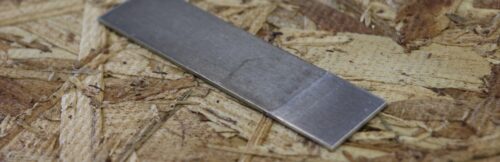
A common question asked by customers is “Why do aluminum castings discolor during vacuum impregnation?”. Aluminum parts with highly machined surfaces are more likely to be affected than those that are cast.