YOUR CART
- No products in the cart.
Subtotal:
$0.00
We often write about the different types of vacuum impregnation systems that are commonly used and how each may be best suited for use when processing a particular type of part. Once you have determined the type of system that is required, you then need to select the appropriate sealant for the system and application.
Is it more cost-effective to repair your existing vacuum impregnation equipment or to purchase a new system? There are many factors to consider when making this decision.
In the vacuum impregnation industry one of the more frequent topics of discussion surrounds the difference between anaerobic and thermal curing impregnation sealants.
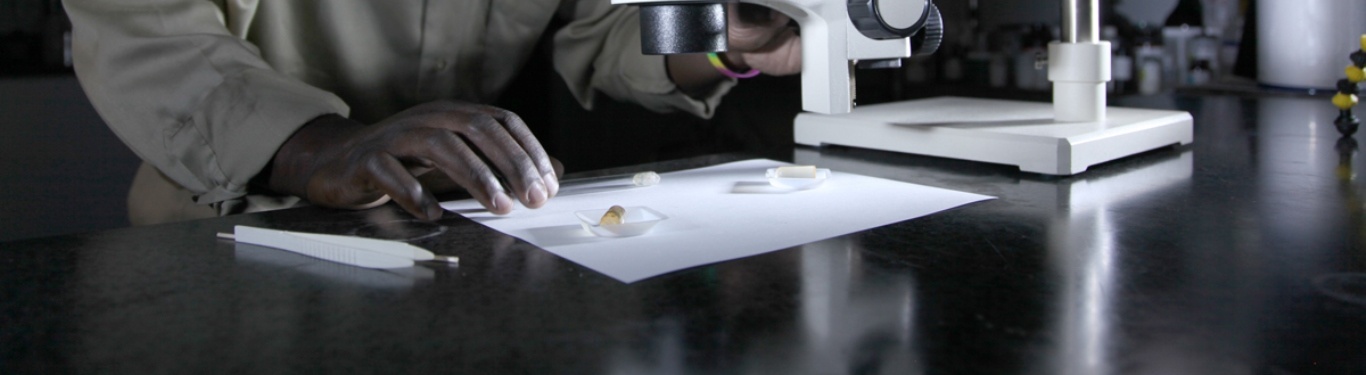
It is well known that thermal cure sealants, like Godfrey & Wing’s 95-1000A and 95-1000AA, are more widely used than anaerobic sealants (95-1000AC and ACP). Many will say the reasons for the increased use of thermal cure sealants are acquisition cost of the sealant or equipment. Others will cite ease of maintenance while still others will say it is due to the elimination of a host of failure modes.
In reality the decision for choosing a specific style of sealant lies with the part to be impregnated. Some parts are just more likely to be sealed in one versus the other. It has nothing to do with the quality of the sealant, but it has everything to do with the materials being impregnated and the size of the pore or leak path.
| Thermal Cure | Anaerobic | |
|---|---|---|
| Curing | Polymerizes when heated to 195°F | Polymerizes in the absence of air over 24-48 hours |
| Pressure Testing | Immediately after impregnation | Need to wait 24-48 hours after impregnation |
| Maintenance | Continuous refrigeration | Continuous refrigeration and aeration |
| Packaging | 5 gallon, 50 gallon, 250 gallon | 4-5 gallon carboy |
| Applications | Castings, aluminum, iron, steel, zinc | Powdered metal, electrical applications, cables |
Powdered metal applications have large, through porosity and work best when using an anaerobic sealant. Why is this? First, once impregnated into the part, the sealant may be activated in a chemical bath to seal the pore at the surface, allowing the remaining sealant trapped in the porosity to cure over time. This reduces the chance of sealant migration from the pore which could be found when using a thermal curing sealant with large open porosity.
Likewise when sealing micro-porosity in a casting, a thermal cure sealant will perform better than an anaerobic as the process used to impregnate thermal cure sealants is more robust and thorough. Also since the sealant is forced to cure when it reaches the 195°F cure temperature, impregnated parts may be tested immediately after impregnation. Thermal cure sealants also will be less reactive and have a much longer pot life than anaerobic sealants.
In an aqueous environment small insoluble particles are kept in solution by physical forces. While temperature and velocity play important roles in solution stability, electrokinetic force is the biggest contributor. Most solids suspended in water possess negative charge. Because particles with similar charges repel each other, those particles with like charges choose to remain in suspension rather than clump together and settle out of suspension. Similarly, any circumstance that would result in reduced charges on the particles would allow them to gather into larger particles and eventually “floc”.
 The other morning I was walking the dog around 5:00 AM, and I noticed how exceptionally crisp and brilliant the stars were in the pre dawn sky, shining though the high pressure system overhead. While finishing the walk around the neighborhood, I thought about mankind’s worldview that the earth was flat as recent as 600 years ago and the reluctance of decision makers of that time, influenced by the rhetoric of naysayers, to accept anything other than the status quo.
Did we make money on that job?