YOUR CART
- No products in the cart.
Subtotal:
$0.00
The goal of a foundry is to produce high quality die castings that meet or exceed the customer’s specifications at a competitive cost. In some die casting cases, those specifications require that the part must hold pressurized fluid or gasses.
Companies use vacuum impregnation when the part must hold fluids or gasses under pressure. Vacuum impregnation is a proven process that seals internal porosity without impacting any other features of the manufactured part. A common question asked about vacuum impregnation is “Should vacuum impregnation be done before or after die casting machining?”
While some refer to porosity as a defect, it occurs naturally and is found in most materials, both man-made and in nature. In metal castings, porosity is typically considered any void found in the casting. Some metal casting porosity can affect the part’s structural integrity, creating a failure point. More commonly, porosity prevents the part from being pressure tight. This will impact performance if the part is designed to hold gases or fluids.
Casting porosity can be caused by gas formation or solidification while the metal is being moved from a liquid state to a solid state. This porosity can range in size, from sub-micron to voids greater than 10 mm, depending on the casting.
In general, there are three casting porosity classifications:
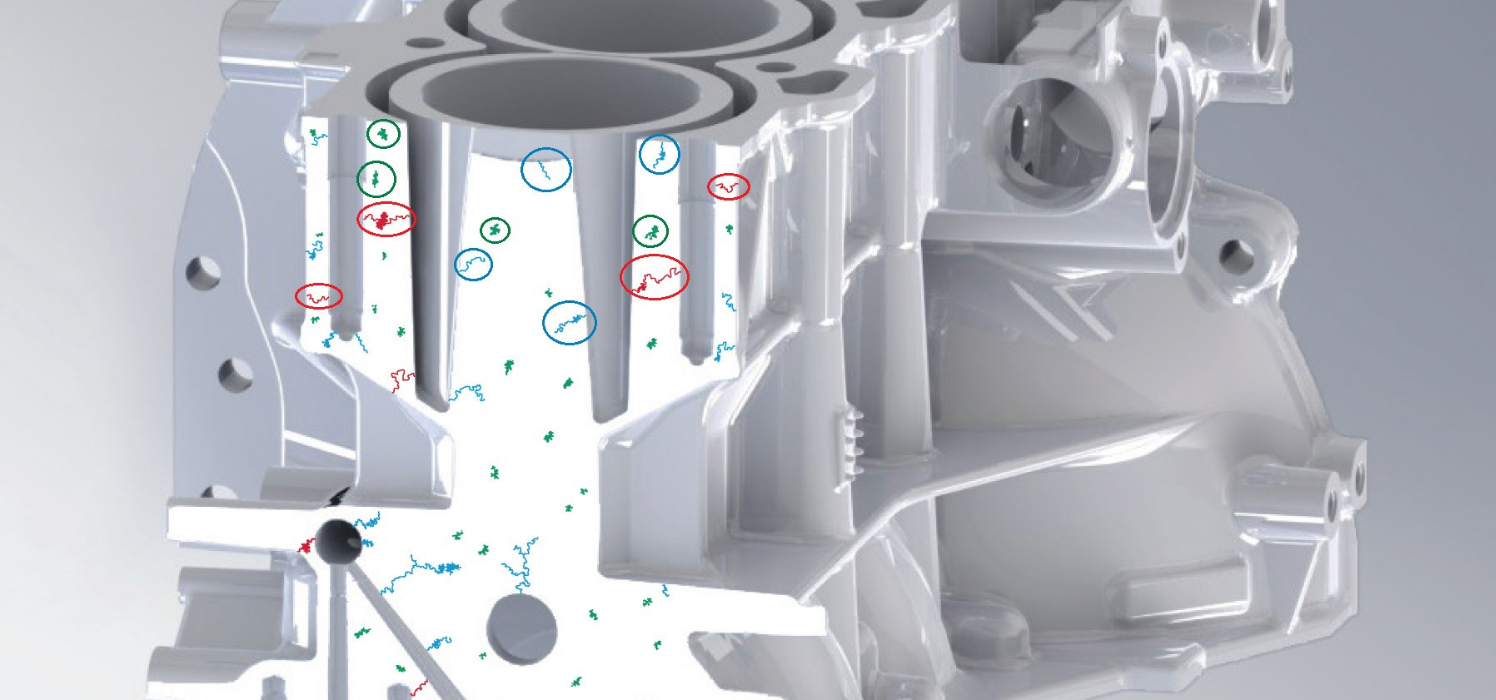
Figure 1: There are three types of casting porosity: blind porosity, through porosity, and fully enclosed porosity.
Blind and through porosity cause immediate casting problems. Blind porosity can cause internal corrosion; while through porosity will create a leak path and allow gas and liquids to seep through the casting (Figure 2). In addition, blind porosity can cause defects on the part surface when secondary treatments, like powder coating or anodizing, are done. This is because solutions used to clean the castings prior to the treatment will leech out of the voids after the surface finish process.
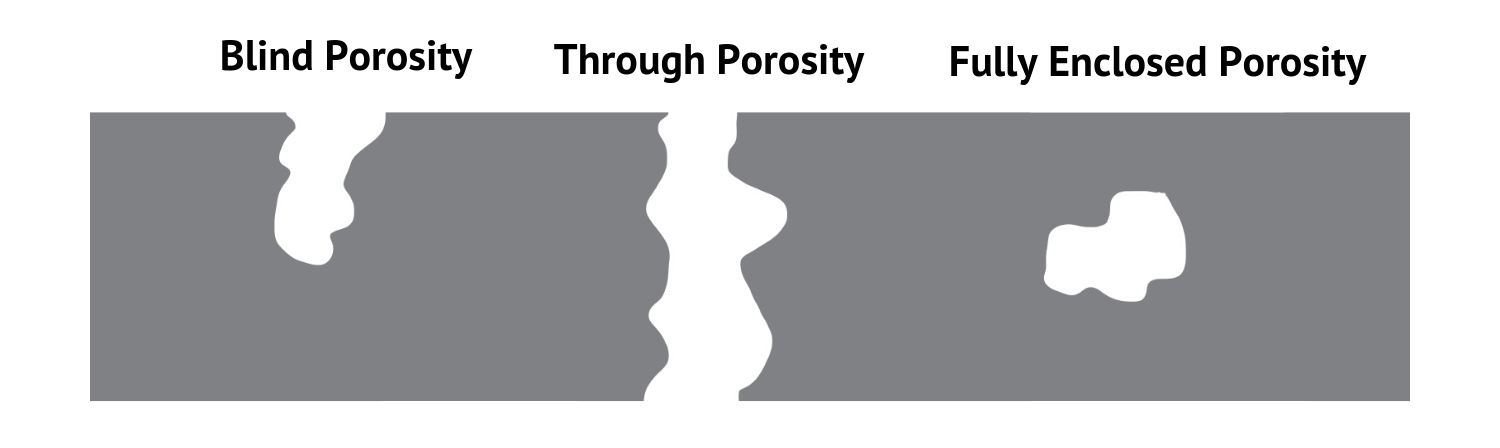
Figure 2: Blind porosity can cause internal corrosion; while through porosity will create a leak path and allow gas and liquids to seep through the casting.
When a machine tool cuts into the surface or “skin” of a casting, it can expose or open porosity (Figure 3). The porosity may be either blind porosity or existing blind and enclosed porosity may be opened and become through porosity.
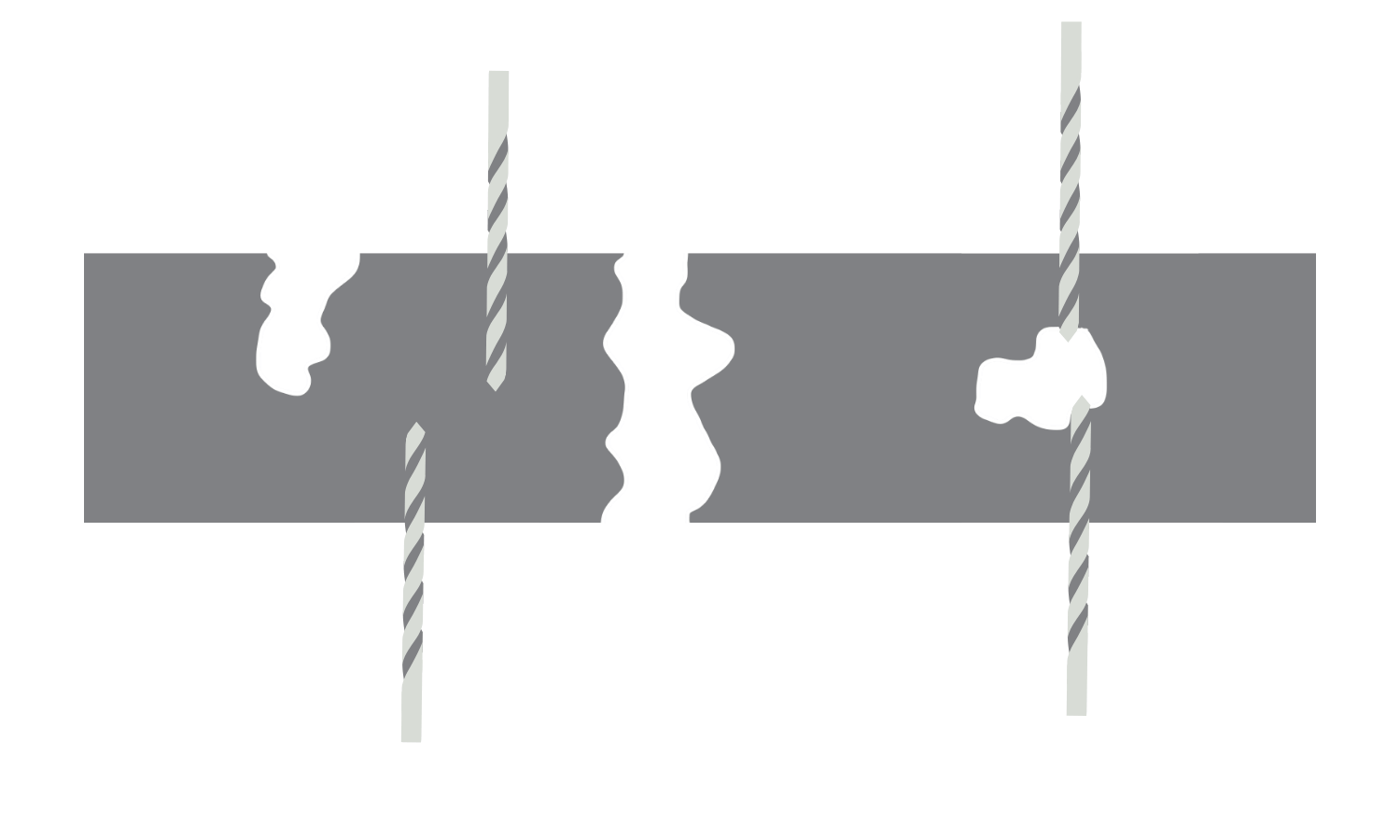
Figure 3: When a machine tool cuts into the surface or “skin” of a casting, it can expose or open porosity.
The new inter-connected porosity (highlighted in green) will create a leak path (Figure 4). The leak path will cause fluids and gases to leak from the casting, causing it to be non-conforming, and in many cases unusable. Unfortunately, this occurs precisely at the wrong time, since the non-conforming part has already been cast, cubed (pre-machined), washed, tested, shipped, fully machined, washed and tested again. All the value has been added to the non-conforming part. In the worst-case scenario if the problem occurs frequently, the manufacturer may have maxed-out their production and may be unable to replace the non-conforming castings with functional parts, delaying shipments and significantly increasing costs.
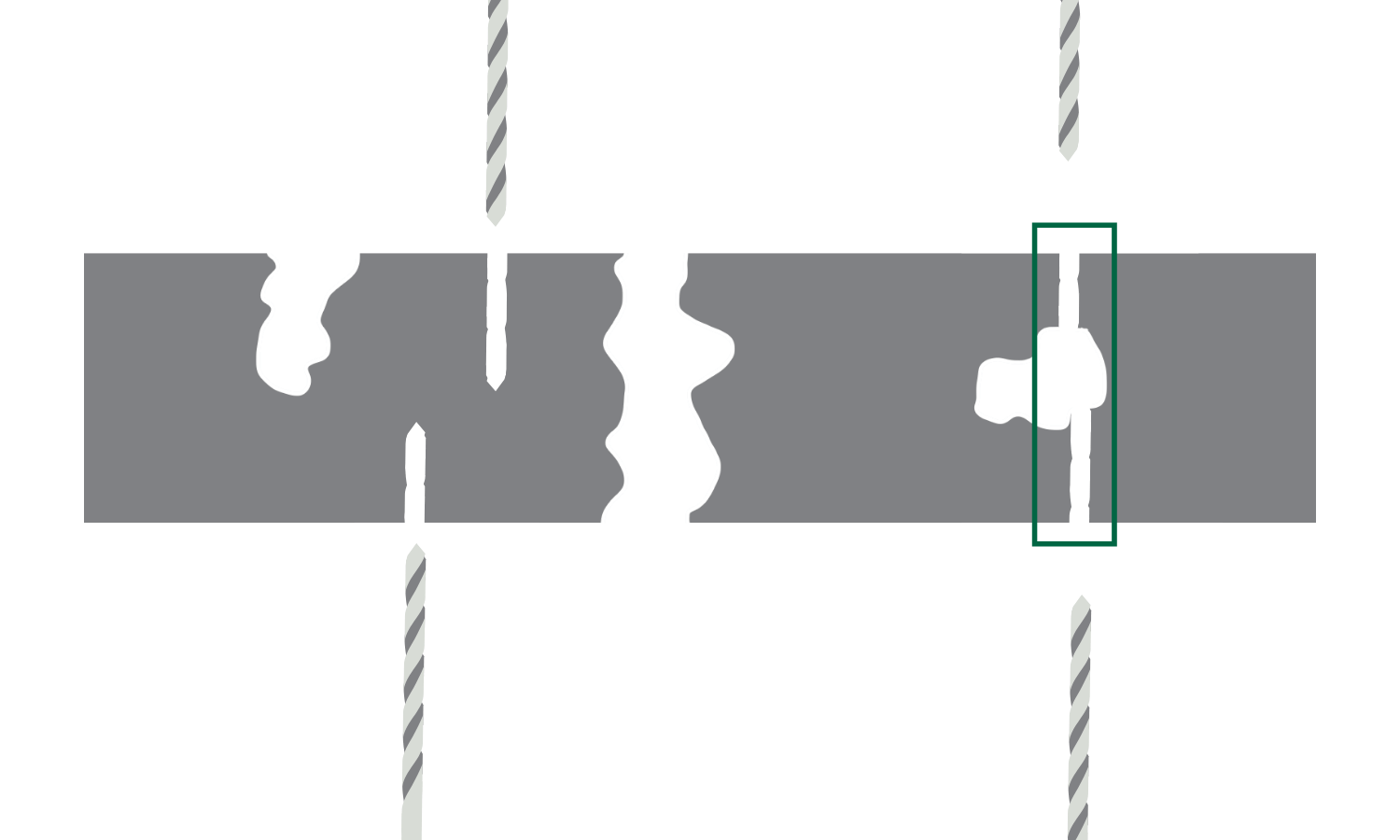
Figure 4: The new inter-connected porosity (highlighted in green) will create a leak path. This leak path will cause fluids and gases to leak from the casting, causing it to be non-conforming, and in many cases unusable.
Impregnating 100% of castings after final machining is the best way to insure leak free castings at build. If prior to assembly, a final leak test of individual parts is incorporated into production, leak testing fully machined casting and impregnating only the non-conforming parts (often referred to as fix-on-fail) is an excellent alternative.
Another approach is that manufacturers have chosen to increase the machining content at the pre-machine stage (cubing) thus maximizing the exposure of blind and through porosity prior to the parts reaching the final production line. After pre-machining 100% of all parts are impregnated and tested. Only conforming parts are sent through to production when the parts are fully machined in production only a reduced amount of material is removed. Since the impregnation at pre-machining has already sealed both the blind and through porosity, the opportunity to open an interconnected leak path is substantially reduced. In some cases, any non-conforming parts that make it to final test can be easily impregnated without disrupting production on a “fix-on-fail” basis.
Because machining may potentially uncover additional casting porosity, vacuum impregnation should be done after machining. Performing vacuum impregnation after machining is the only way to seal all leak paths. However, some castings may be pre-machined or cubed. Impregnating 100% of production castings after cubing will seal the exposed porosity. In this case, impregnation is still very effective in reducing non-conforming parts at final assembly.
Godfrey & Wing has published an article in LightWeighting World titled “Vacuum Impregnation Enables Lightweight Material Use”. This article discusses the surge in aluminum use and how vacuum impregnation eliminates aluminum casting porosity. You can read the entire article below.
Recent decades have seen a surge in use of aluminum castings in car manufacturing. Aluminum has been a key material in car manufacturing since the beginning. The first sports car featuring an aluminum body was unveiled at the Berlin International Motor Show in 1899. Carl Benz developed the first engine with aluminum parts two years later1. Since this time, aluminum has become the leading material used in various components and car models. Aluminum use now ranges from mass-market to luxury vehicles.
As this surge has happened, vacuum impregnation has become the primary method to eliminate the porosity inherent in aluminum castings. OEMs are redesigning parts and bringing vacuum impregnation systems in-house to meet the aluminum use demand.
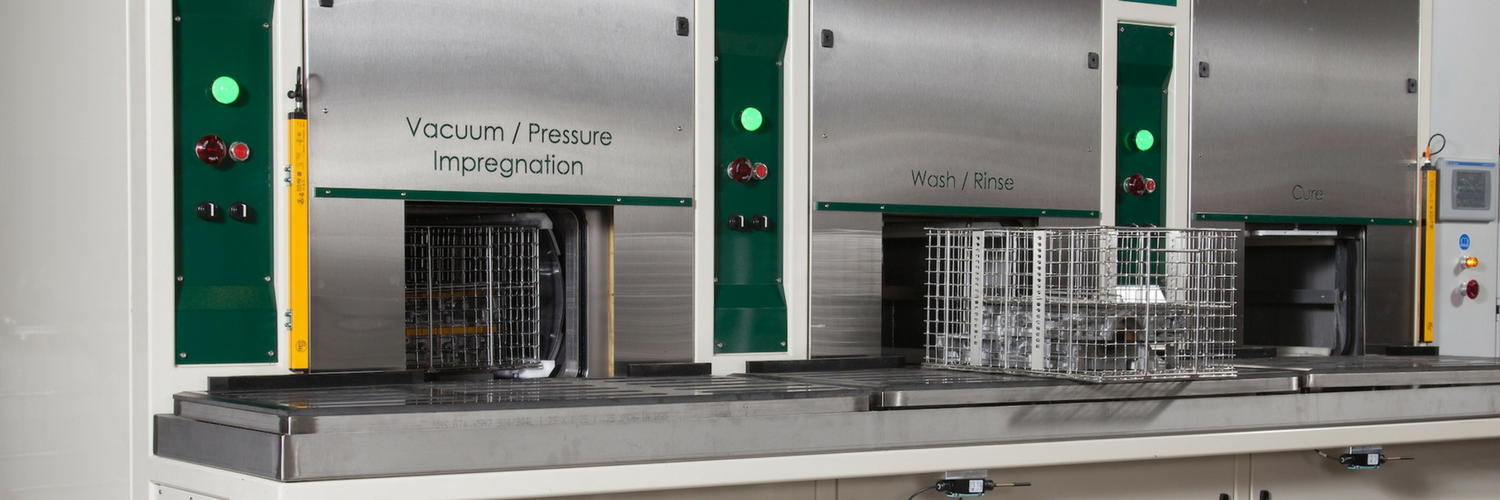
Godfrey & Wing’s vacuum impregnation equipment is the best in the world. The equipment re-imagined vacuum impregnation by making it safer, increasing production and eliminating casting defects. But how exactly does it work? Watch this animation video.
Vacuum impregnation seals porosity and leak paths in metal castings and powdered metal parts that form during the casting or molding process. The process is done by filling the pores with a sealant under pressure to stop fluids or gases from leaking under pressure. Vacuum impregnation stops casting porosity and allows manufacturers to use parts that would otherwise be scrapped.
It is the end of another year. Which means that it is time to address our mixed feelings about New Years
resolutions, and reflect on the year that is about to end. While we cannot help with your 2017 resolutions, we
can look back on the most read vacuum impregnation and porosity blogs of 2016. Here are our top 5 blogs from
2016.
When a porosity problem occurs, the first challenge
is to determine the type of porosity. The following
porosity classification guide can help you determine
the porosity type.

When a customer has a casting with porosity that is leaking,
they need a solution quickly. Here are some of the more common
questions that we receive in regards to vacuum impregnation and porosity.

Casting impregnation stops leaks caused by porosity.
It is important to understand what vacuum impregnation does not do.
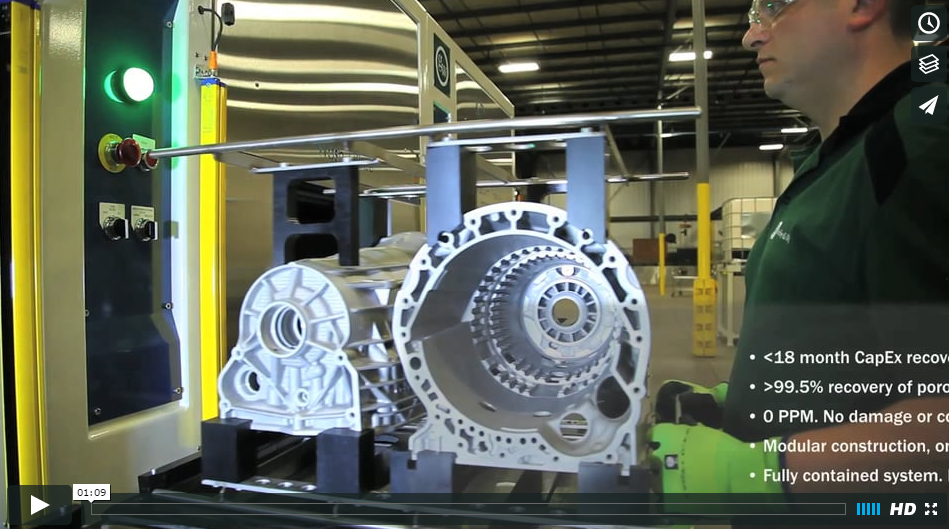
The Advanced Powertrain impregnation (APi) system simplifies
and compacts the vacuum impregnation process for parts like
engine blocks or powertrain transmission cases.
Next year, we will continue to write insightful and helpful content on vacuum impregnation and porosity. Don’t worry,
our 2017 blogs will not require gyms or special diets. They will help you understand vacuum impregnation and solve
your porosity problems.
From our team to your, Happy New Years.
We recently update our vacuum impregnation handbook. The handbook takes the complicated subject of vacuum impregnation and simplifies it. This handbook will allow you to better identify porosity and then learn what vacuum impregnation process and system is best to seal your porosity.
When porosity occurs in your part, you need to get it seal quickly.Use our handbook as a guide to help you find the best solution for your part. Flip through this easy to follow handbook to learn about:

The Albert Handtmann Metallgusswerk GmbH is the largest lightweight (aluminum) foundry in Germany. When the opportunity arose for the company to cast and machine one third of the entire world production of transmission cases and clutch housings for Mercedes Benz, not just any vacuum impregnation system would work.
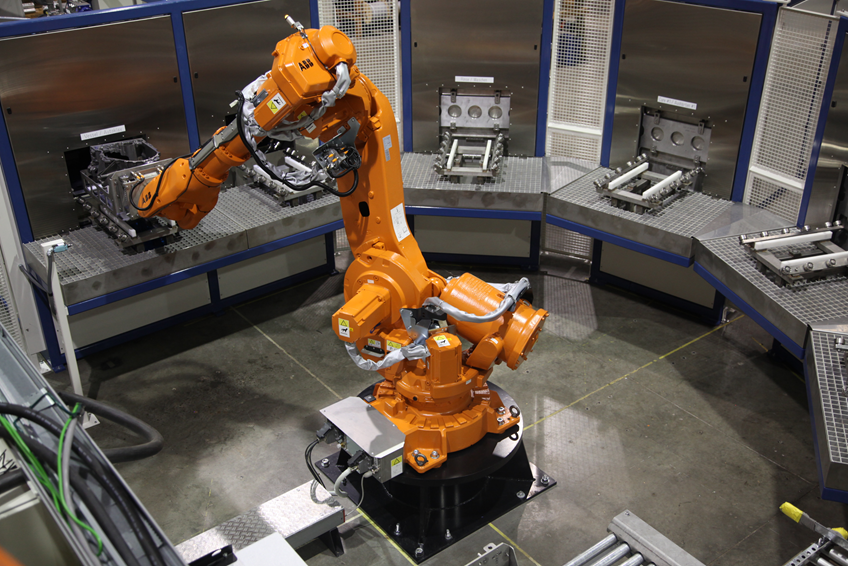
They needed a vacuum impregnation system to meet:
-Stringent Quality Standards
-High Production Volumes
-Meet a Tight Cycle Time
-Fit in a Confined Space
To learn how Godfrey & Wing played an integral role in Handtmann’s manufacturing process,
click here to read the entire case study.
Is it more cost-effective to repair your existing vacuum impregnation equipment or to purchase a new system? There are many factors to consider when making this decision.
I often meet with potential customers who are hesitant to implement a vacuum impregnation process for a variety of reasons. In this article, I will discuss the most common reasons as well as provide some explanation as to why and how a vacuum impregnation program can benefit your business.
One of the most common questions in vacuum impregnation is how much does it cost to impregnate a part, or in other words, how much sealant will a part consume? Parts consume sealant in two ways as part of the normal vacuum impregnation cycle.
The first way that parts consume sealant is that sealant actually penetrates and gets trapped inside the part where the sealant then solidifies and seals the part. The second way sealant is consumed in the vacuum impregnation process is the design waste. This is the excess sealant on the outside of the part that ultimately gets washed off and discarded. If you know the amount of sealant that gets trapped (picked up) inside the part during the impregnation cycle, then you can do a rough estimate of the overall cost simply by multiplying the “pick up” amount by 4.
This calculation not only takes into consideration the sealant cost but also compensates for compressed air, electricity, water, labor, and design waste associated with the overall vacuum impregnation process. It does not, however, include any factor for profit, depreciation, freight, general or administrative expenses, selling costs, or any other non-impregnation process costs.
With that in mind, we can provide some basic information to help you establish sealant pick up rates for both powder metal (PM) parts and traditional aluminum-based parts. This information is based on historical data and is only meant to provide a ballpark understanding of typical sealant consumption. Given that every part is unique and different your application may or may not adhere to these guidelines. As for PM parts with a typical density of 6.8, you can assume an average pick up rate of 1 gram of sealant for every 40 grams of compacted metal. So, if a compacted part weighs 160 grams it will usually pick up about 4 grams of sealant.
For aluminum, let’s assume a density of 2.8 grams/milliliter. If you know the weight of the aluminum part in grams you can simply divide that by the density to get the volume of the part in milliliters. By dividing that by 1,000 you can convert the volume to liters. Once you have the volume you can simply multiply that result by a factor of 8 to get the estimated sealant pick up. For example, if a part made from aluminum weighs 1,500 grams, divide that by 2.8 to get 535mL. Divide 535 by 1,000 to convert to liters which will yield .535. Multiplying the .535 by 8 will provide an estimated sealant pick up of 4.3 grams. This information can then be used to help establish your annual sealant volume or daily sealant consumption.