YOUR CART
- No products in the cart.
Electric motor insulation must face exposure to heat cycles, vibration, moisture, and chemical exposure, which can work against winding integrity. Without proper protection, stator and rotor windings can become vulnerable to performance issues or premature failure.
Vacuum pressure impregnation (VPI) is a process utilized for sealing and strengthening electric motor windings, driving resin deep into voids between conductors under vacuum and pressure. At Imprex, a division of Godfrey & Wing, we design and manufacture VPI systems for motor manufacturers and OEMs, with more than 50 years of VPI design and manufacturing experience.
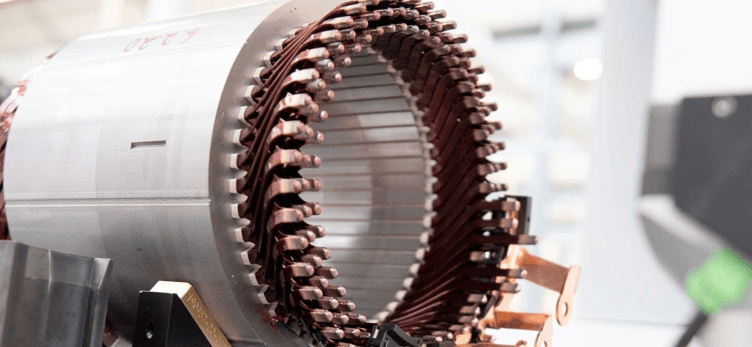
Winding conductors contain small gaps and interstitial spaces between wire layers and motor insulation materials. These voids create paths for moisture ingress, partial discharge, and thermal stress, which can shorten their service life. VPI fills voids, bonding the winding in a solid mass and creating a uniform insulation barrier that can hold up under thermal and mechanical load.
Dip-and-bake processes can leave air trapped in winding layers, especially in form-wound coils. VPI uses vacuum to evacuate air and then applies pressure to drive resin into the winding. The result is deeper resin penetration.
For motor insulation, this contributes to improved properties, which can include:
Motor insulation materials should match the motor’s thermal class and operating environment.

Stator insulation and rotor insulation face different stress profiles that can lead to failure under load. VPI creates a continuous resin matrix around stator conductor bundles. This helps to reduce partial discharge at high voltage and vibration-related wire movement, and improves heat transfer to the stator core. For rotors, resin impregnation keeps the wound rotors in place to reduce the risk of turn-to-turn shorts that can be seen over time in unimpregnated windings.
VPI can extend motor service life and, in many applications, reduce total cost of ownership. VPI-treated windings can offer these reliability advantages over untreated windings:
For motor designers and OEM engineers specifying motor winding protection, VPI is a choice that can support long-term performance.
Our VPI systems are used to impregnate wound components in applications such as:
Our automated systems feature deep vacuum capabilities to ensure consistent impregnation for every cycle.
As the largest and longest-serving vacuum pressure impregnation equipment manufacturer in the world, we deliver on VPI systems for electric motor winding insulation. Here’s what we bring to every program:
Ready to discuss your motor impregnation requirements? Contact our team to get started.