YOUR CART
- No products in the cart.
Subtotal:
$0.00
An effective production flow involves work stations and equipment to be arranged in a sequence that supports a smooth flow of parts and materials with minimal delays. Implementing an efficient production flow leads to increased production and flexibility, as well as a reduction in capital requirements.
Anoplate, an industry leader in surface engineering, faced a production flow dilemma. The company offers vacuum impregnation services to seal leak paths and eliminate failure modes that could develop from outgassing, chemical compatibility, or bleed out of pretreatments in porous materials. Anoplate processes high value, complex die castings for some of the largest and most respected aerospace, defense, information technology, and recreation companies in the world. The castings often have thin walls with small blind taps.
The Challenge
Anoplate’s operations span across two buildings. Its headquarters comprises of its offices and vacuum impregnation operation. The second building, located across the street, houses its vapor degreasing and plating operations. Anoplate uses in-house batch impregnation systems to process the die castings. The batch system aggregates various parts and processes them in large batches. Before impregnation, parts are processed through vapor degreasing.
Despite being well versed in vacuum impregnation, the company could not efficiently process complex castings due to three limitations of their batch systems.
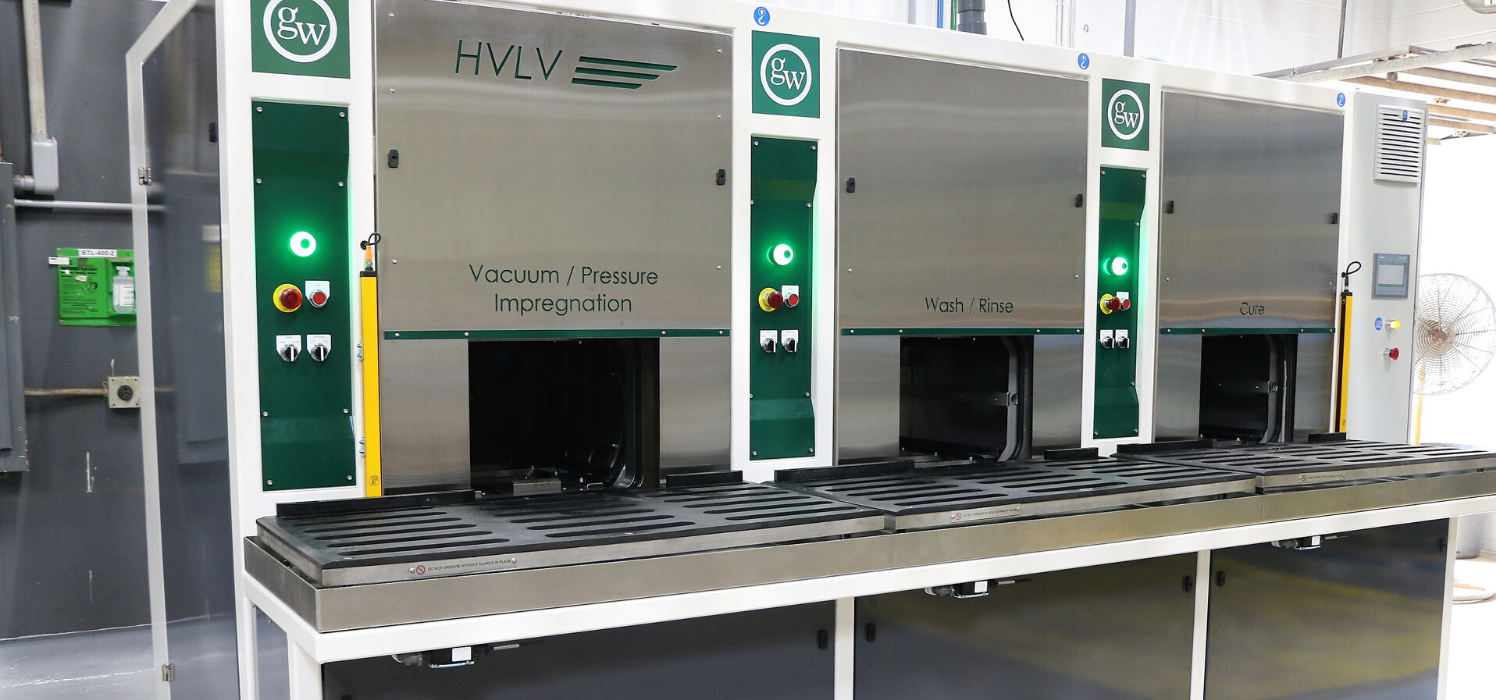
The SolutionThe company laid out its vision, and Godfrey & Wing responded with the lean, front-loading HVLV vacuum impregnation system, customized to address the company’s challenges.
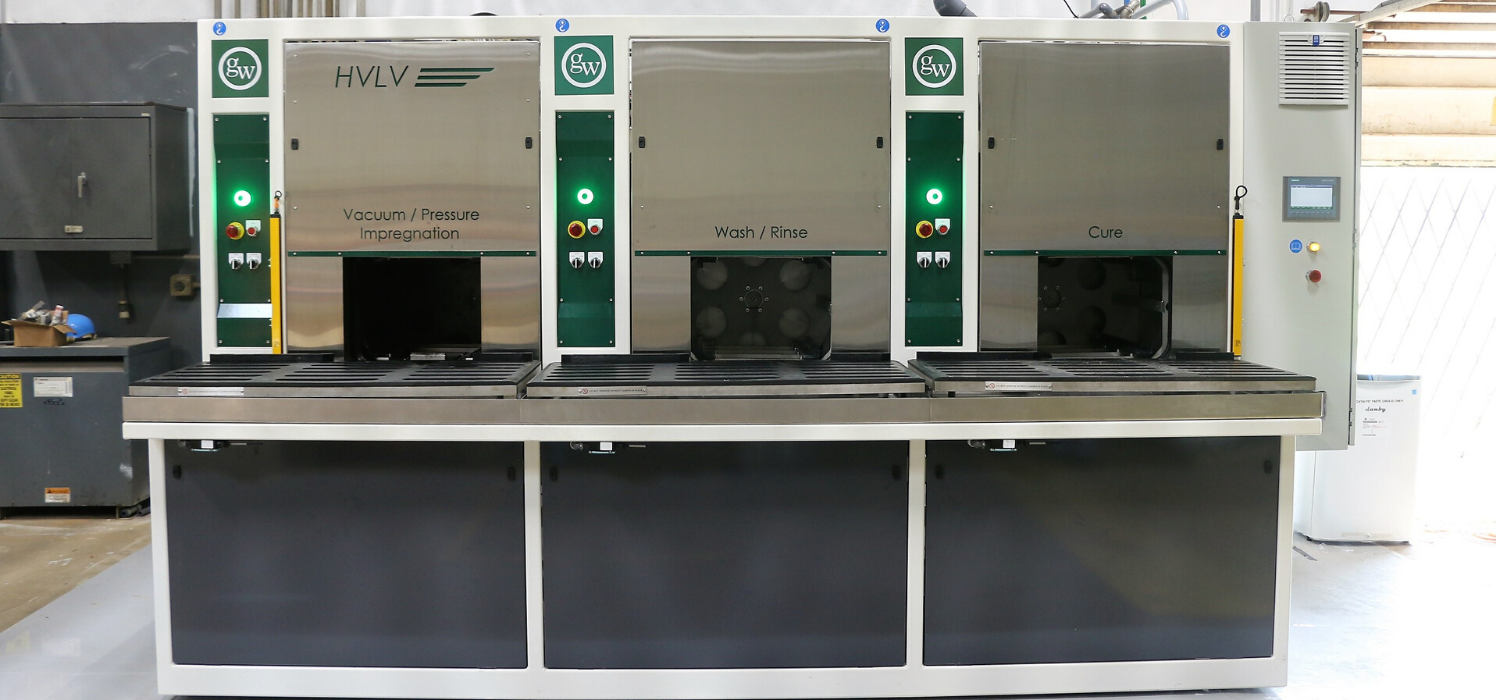
To eliminate contamination, Godfrey & Wing designed custom fixtures to maximize the number of castings per cycle and protect critical machined features. The HVLV’s advanced wash cycle was programmed with an aggressive wash to flush sealant from blind holes and machine features.
After impregnation, the part is centrifuged to recover unused sealant. The sealant is returned to the sealant reservoir for use in subsequent cycles. The HVLV recovers unused sealant before the wash, which eliminates sealant drag out, and risk of contamination.
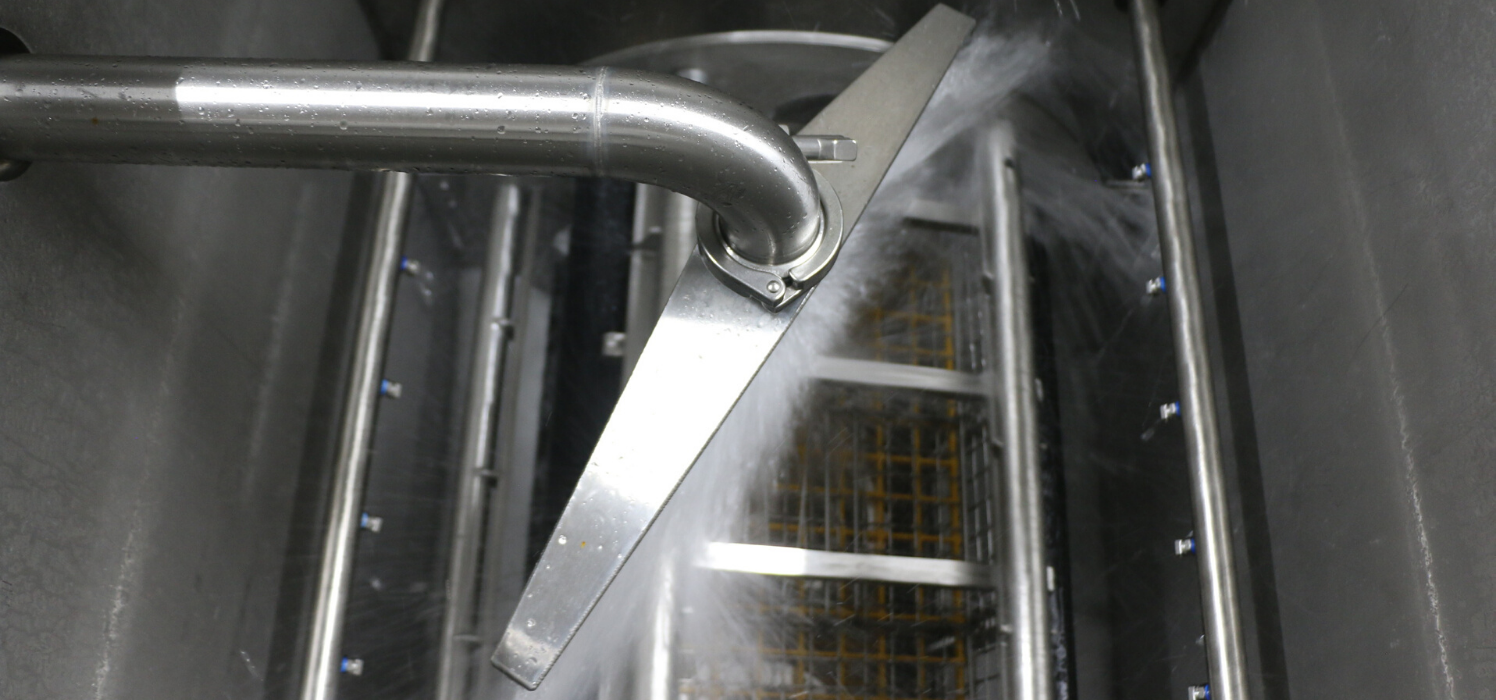
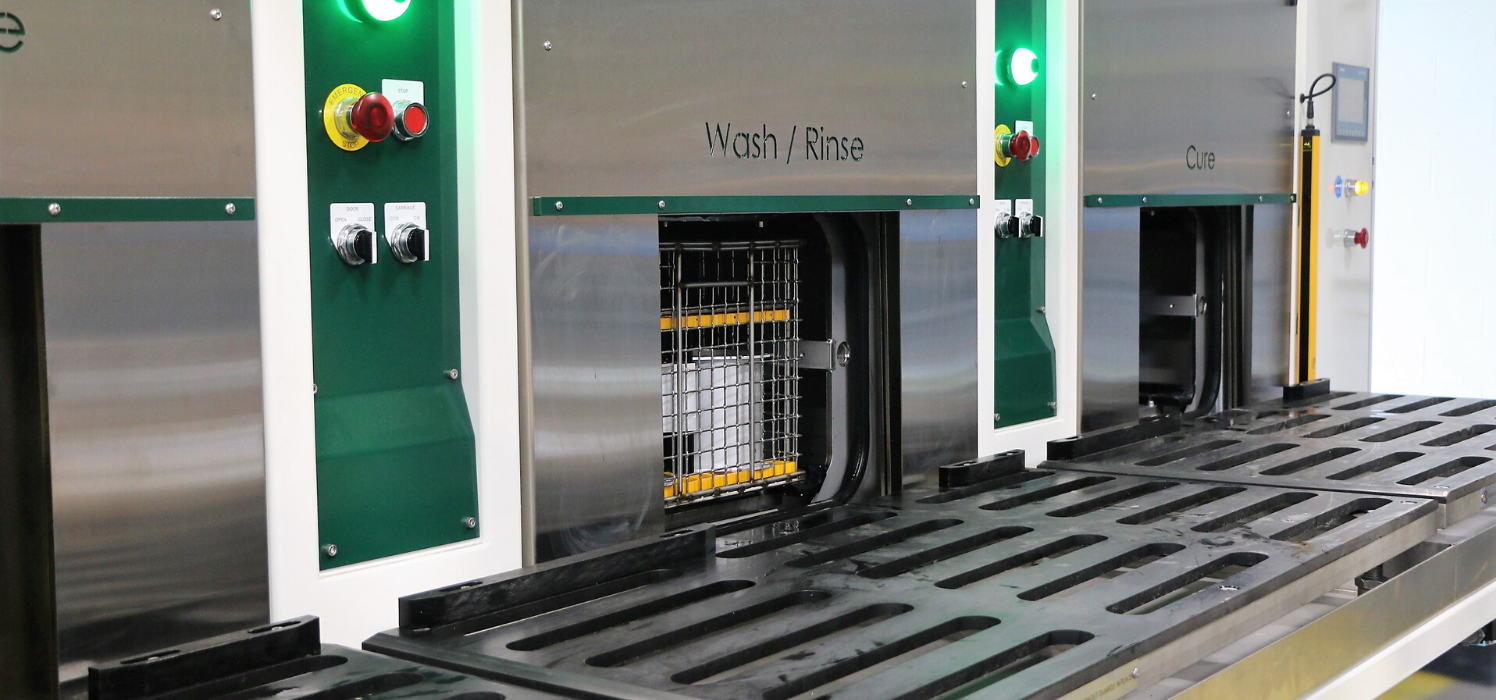
Recognizing the company’s desire to place the system in the same building as plating, Godfrey & Wing designed the HVLV to align with production. HVLV’s modular footprint requires 96 square feet without any floor changes. Godfrey & Wing also studied how the HVLV would integrate with Anoplate’s order of operations and concluded that with the HVLV, Anoplate’s vapor degreasing process could be eliminated.
While the system sounded perfect, Anoplate conducted rigorous sample testing before investing. Samples were processed at Godfrey & Wing’s headquarters on a machine identical to the HVLV proposed to Anoplate. The results demonstrated that the HVLV not only sealed the leak paths, but eliminated contamination, and reduced sealant usage. Also, the company was able to see firsthand how the modular footprint could easily fit into its existing production line. With these results, Anoplate purchased an HVLV.
The Results
The HVLV was installed, operators and maintenance were trained, and the system was processing parts in under two weeks. Since then, the HVLV is addressing Anoplate’s challenges.
“Considering our challenges, the HVLV has been a very effective solution delivering unrivaled quality for our advanced manufacturing environment.” Said Jesse Campbell, Anoplate’s Vice President of Engineering, “This system has also changed our perception of vacuum impregnation equipment in that it is simple to use, and the look is sleek and modern.”
In SummaryThe HVLV has created a competitive advantage to Anoplate’s vacuum impregnation services. The system has transformed its impregnation business by reducing costs, increasing quality and improving efficiency.