YOUR CART
- No products in the cart.
Subtotal:
$0.00
Water, as we all learned in basic chemistry, exhibits a unique phenomenon: as it solidifies, it expands. For other liquids in our physical world, solidification results in just the opposite: shrinkage.
When a casting porosity problem occurs, the first challenge is to determine the type of porosity. The following porosity classification guide can help you determine the porosity type. This is important information to know, because the type of porosity will dictate the vacuum impregnation process to use.
In general, there are three basic classifications of casting porosity:
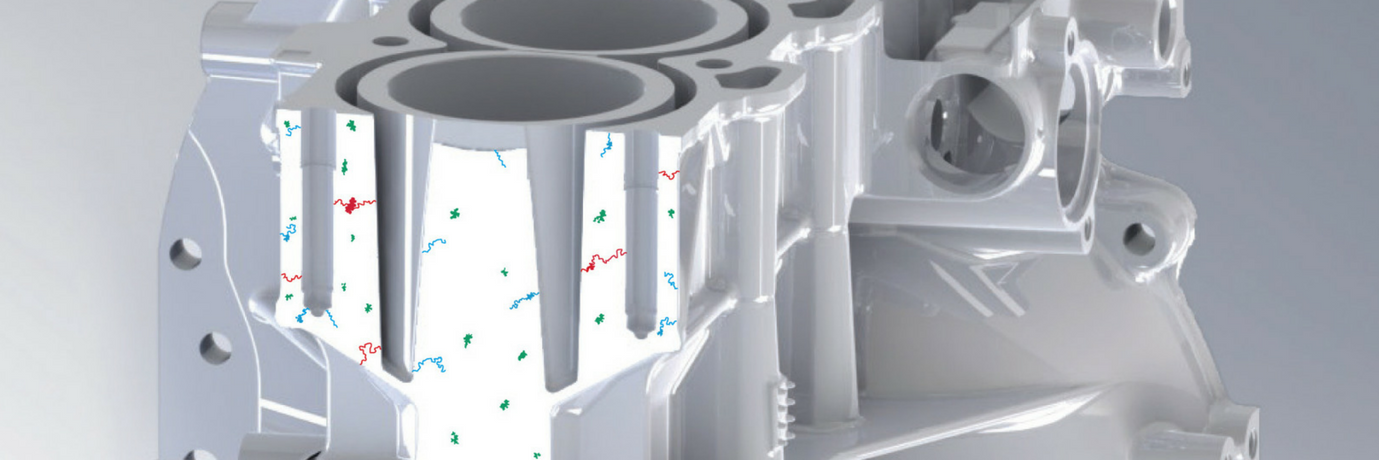
Blind and Through porosity cause immediate casting problems. Blind porosity can cause internal corrosion; while Through porosity will allow gas and liquids to seep through the casting. In addition, blind porosity can cause defects on the part surface when secondary treatments, like powder coating or anodizing, are done. This is because solutions used to clean the castings prior to the treatment will leech out of the voids after the surface finish process.
Fully enclosed porosity is not a problem unless secondary machining uncovers this porosity. Machining can break fully enclosed porosity, which will then turn it to either Blind or Through porosity. This is important to know, because porosity detection should not be done until machining of the casting is complete.
Related: Should Vacuum Impregnation Be Done Before or After Machining?
The best way to seal Blind or Through porosity is with vacuum impregnation. Vacuum Impregnation eliminates the negative effects of porosity such as leaks, and corrosion, thus achieving completely sealed castings. Understanding the porosity and using vacuum impregnation will allow you to efficiently produce parts while minimizing costs.
Video: Understanding the Vacuum Impregnation Process