YOUR CART
- No products in the cart.
Subtotal:
$0.00
The Continuous Flow Impregnation (CFi) System is a lean, front loading vacuum impregnation system that uses a robot for part handling and transfers between modules. This impregnation system has a cycle times of less than 95 seconds. Individual part handling leads to many process improvements, such as shorter cycle times, better rinse results without risk of contamination, damage or discoloration. Furthermore, each part passes through an identical process, and process parameters can be directly associated with a particular part (tracking).
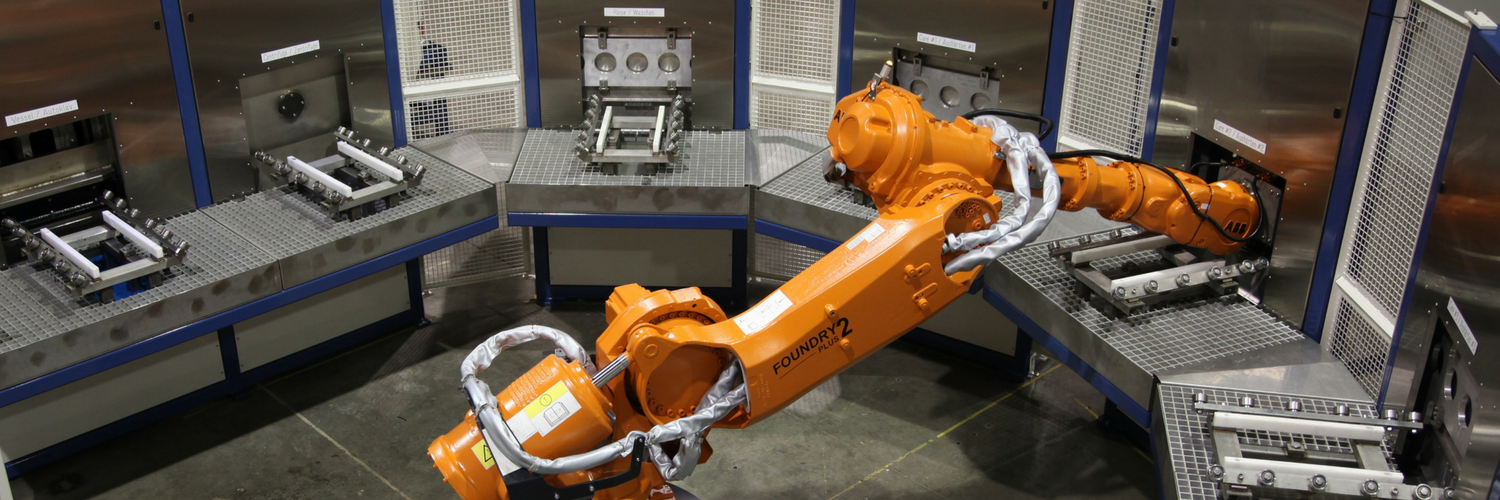
Continuous flow is the most recent technology in vacuum impregnation. Continuous flow vacuum impregnation systems are cellular or lean in design, focused on conserving valuable resources including labor, power and floor space while being more ergonomic than batch systems. The individual modules are loaded from the front, eliminating the need for overhead hoists and cranes. These systems impregnate smaller size batches or single components per impregnation cycle. This allows for reduction of individual module cycle times as well as increased mechanical manipulation assisting in the accomplishment of the four basic tasks of the impregnation process.
In general, lean, front loading continuous flow vacuum impregnation equipment uses smaller modules with little or no supporting infrastructure. Front loading systems can occupy as little as 86 ft2 of floor space and utilize conventional basket dimensions (e.g.: 600 x 450 x 350 mm), which can be adapted to meet specific part dimensions, if required.
Advantages of continuous flow vacuum impregnation systems:
Disadvantages of continuous flow vacuum impregnation systems:
The CFi technology is fully self-contained for quality with the robot and PLC working together to ensure that parts do not leave the cell if they have not met all of the pre-determined process parameters. Likewise, the use of robotics shortens cycle times, improving overall TAKT time and production volumes. At the same time robotic handling provides for repeatable processing while controlling handling damage.
The Continuous Flow Vacuum Impregnation technology offers manufacturers and OEMs the opportunity to completely integrate the impregnation process into their overall production line eliminating labor, reducing WIP and controlling costs. Existing cells deliver over 240,000 cycles per year operating 24/7. They are ideally suited for larger powertrain installations where uniformity and repeatability are essential to part quality and delivery is paramount. Higher volumes, expansion or ramping production can be met by integrating duplicate cells. The Continuous Flow Vacuum Impregnation technology enables continuous production through lean manufacturing.
| System | Workload Size | Process | Cycle Time | Use | Labor | Floor Space Requirement |
|---|---|---|---|---|---|---|
| Top loading batch system | 24-96 inches in diameter; working depths of 12-120 inches | DVP, DV or W | 20-40 minutes | Jobbing and processing hundreds of unique parts, large and small | High | 1.000 to 10.000 square feet, including storage and support equipment |
| Front loading system | Rectangular tote size of 300 mm x 400 mm x 800 mm | DVP or DV | 240-540 seconds | Specialized, similar parts, large and small | Low | Low |
| Continuous flow system | Rectangular tote size of 300 mm x 400 mm x 800 mm or direct part handling | DVP or DV | 90 seconds | Specialized, similar parts, large and small | Low to None | Low - less than 600 square feet |