YOUR CART
- No products in the cart.
Subtotal:
$0.00
Why does GW recommend the dry vacuum and pressure (DVP) process?
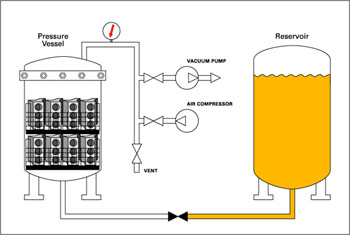 Actually we don’t recommend any one process over another. What we do recommend is that customers evaluate the processes upstream and downstream of the vacuum impregnation system and ask questions like:
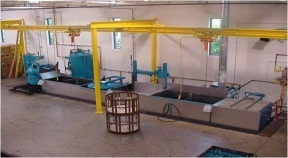 In our service facilities we ask these questions every time we install a new or refurbished system. For our internal use the answers lead us to DVP. Our service centers process components from thousands of customers with a wide variety of metal castings, plastics, cables, and even rocks. Therefore we have to impregnate parent materials with a wide range of porosity and voids, from fine micro-porosity in magnesium and aluminum to some open porosity in cast iron to the long voids found in stranded cable. And to top it off we need to do this quickly to deliver a sealed component to a customer cost effectively. Time is money. Therefore DVP is our service center system of choice.
Well surely since GW uses DVP in their service facilities it must mean DVP is the best for all customers, right? Nope.
Let’s look at pressed or powdered metals. A cost effective wet vacuum system works very well for these parts as it is all “through” porosity. Some high density PM materials actually benefit from a wet vacuum pressure process. Insert molded connectors may often be sealed with only a wet vacuum process.
Then there are cases where a customer will impregnate one part number in low volumes. Given a stable casting process, a dry vacuum process could work well and may be proven by running samples prior to purchasing a system.;
So while we don’t promote one type of process over another our service centers chose the DVP process so they are equipped to handle a variety of sealing demands, from the easiest to the most difficult.
One thing is for sure, the day your capacity runs short or your parts don’t seal because all the questions were not answered thoroughly is a sad day indeed.
If you are considering purchasing a vacuum impregnation system, you may be interested in our Vacuum Impregnation Equipment questionnaire. You can complete the questionnaire here, and then we will put together a customized plan to help you achieve your goals.